
2023 · Fintech · B2B
Streamlining bank account creation: From weeks of paperwork to a 21-minute digital process
Tride helps non-profit organizations open and manage bank accounts. I designed an onboarding experience to help NGOs get an account sooner, without weeks of paperwork and back-and-forth.
Role
Lead Product Designer
Team
Jeremiah · Adebayo · Olamilekan · Ayomide · Isaiah
Timeline
2023
Category
Fintech · B2B
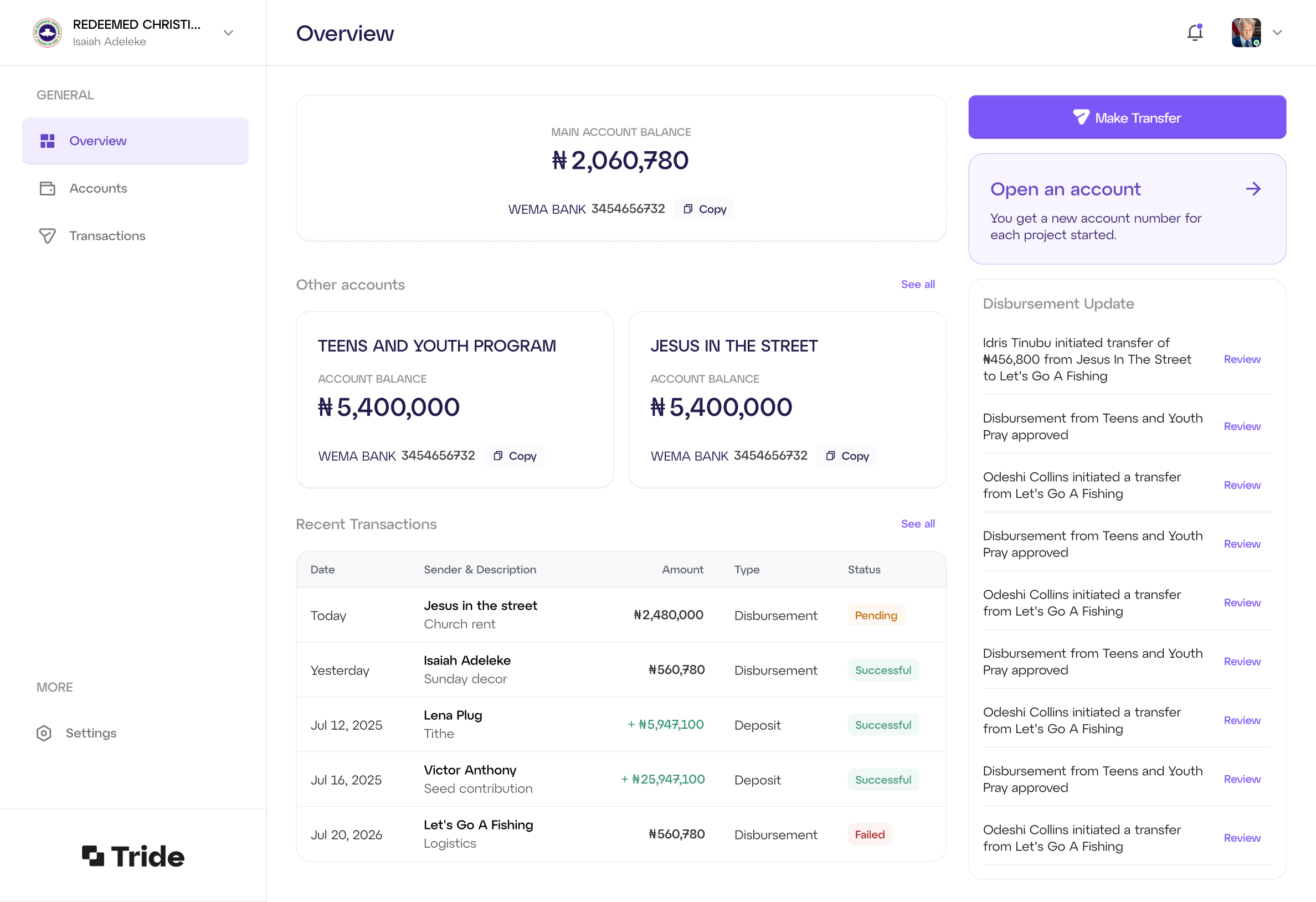
21 min
Fastest account creation
From signup to completed onboarding
50%
Drop-off recovery
6 of 12 original drop-offs returned and completed
57.1%
Cohort completion
8 of 14 original users completed after improvements
Challenge and research
Opening a corporate bank account in Nigeria can take 4 to 18 weeks, and NGO accounts are no exception. My task was to design an onboarding experience that could get non-profits an account as early as possible while reducing the stress of paperwork and back-and-forth.
After speaking with six non-profit founders, the challenge became clear: they needed accounts in their organizations' names to scale. Most had started with personal bank accounts, but donors were beginning to question that arrangement.
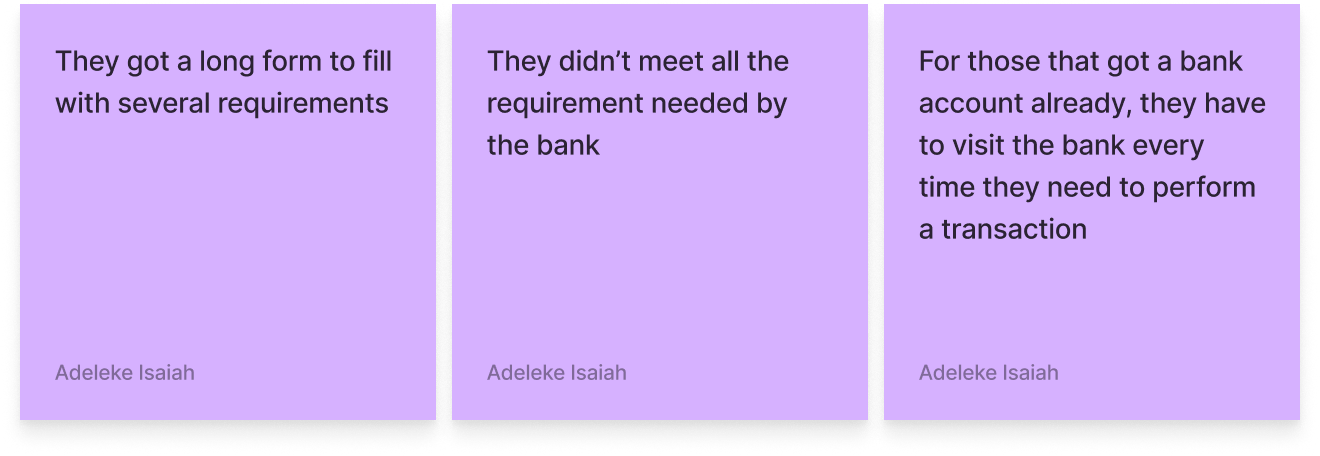
They approached banks to open organization accounts, but the process stood in their way.
Getting to work
As the product designer, my first task was to understand the compliance requirements for opening an NGO bank account in Nigeria and work with the team to find a suitable infrastructure partner.
Two discoveries shaped the approach:
- Not every piece of information requested by banks is a Central Bank of Nigeria compliance requirement.
- Banking infrastructure companies can power accounts through APIs, letting founders complete the process from home.
How I solved this
I listed the information and documents required by our infrastructure partner and for CBN compliance. Then I asked: how might we make this long list less stressful for NGO founders while reducing the time it takes to fill it out?
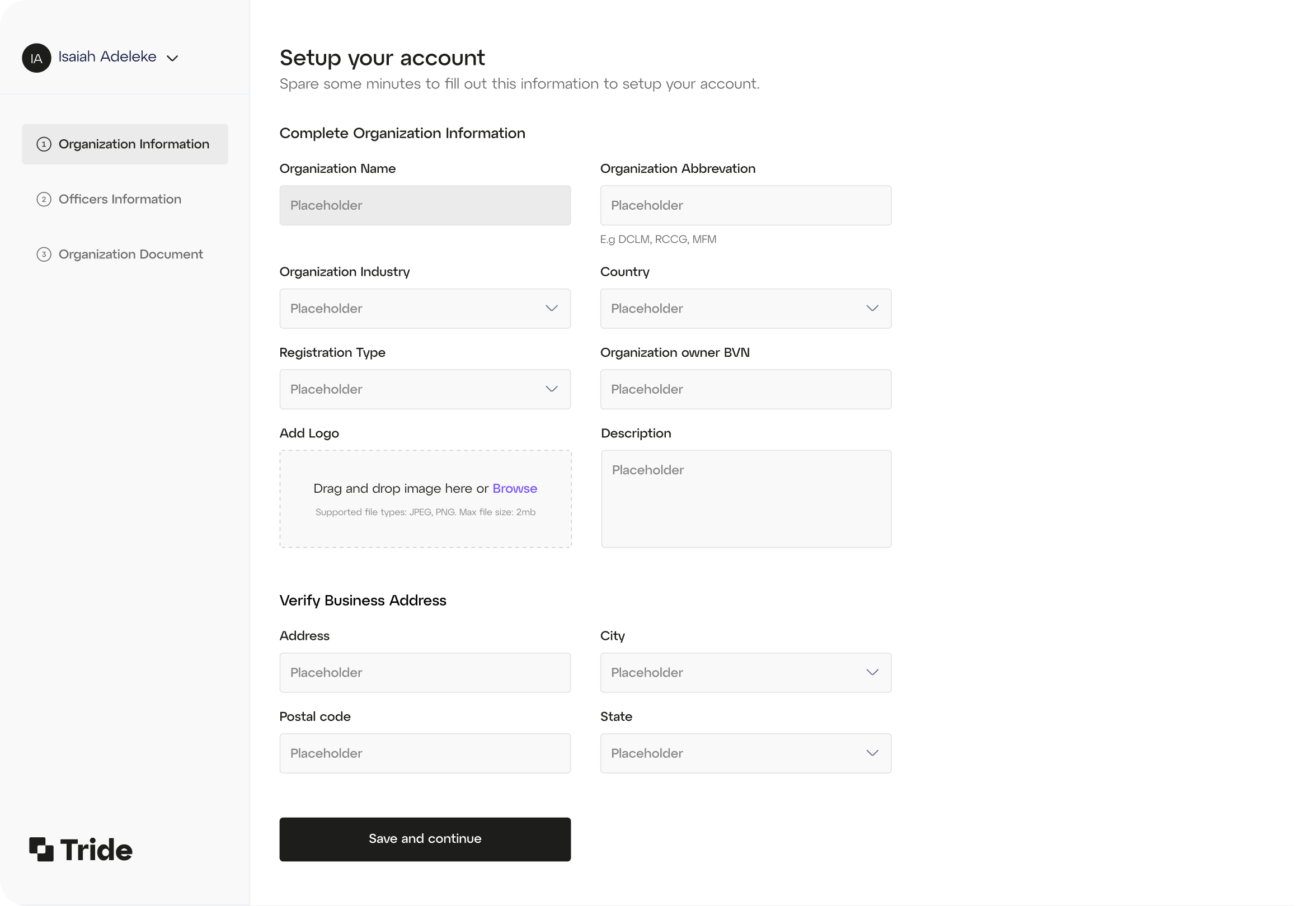
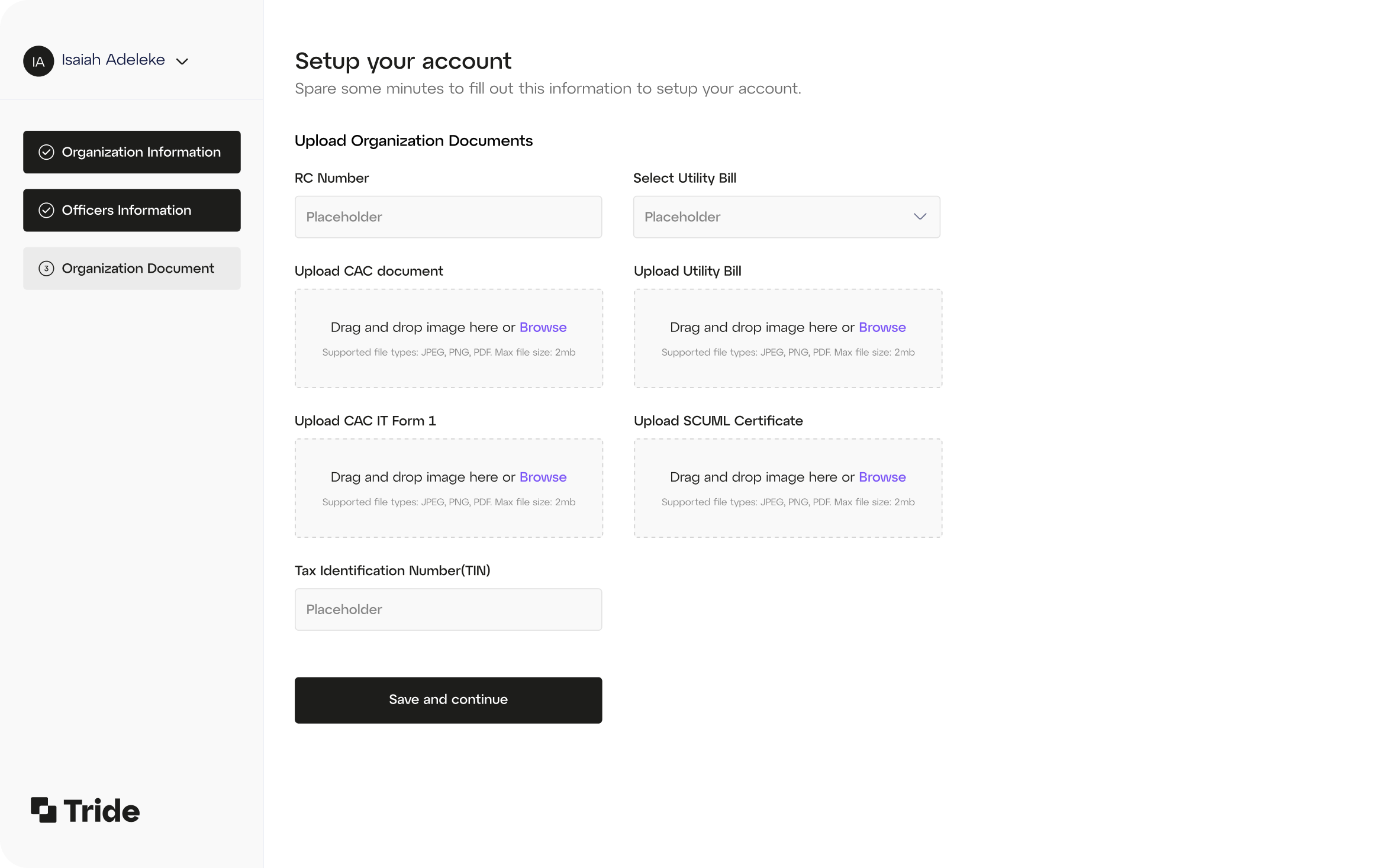
I organized the onboarding requirements into three groups, in the order founders were most likely to have them:

- Readily available — documents and information a founder can provide immediately.
- Not so readily available — items a founder may need to request from someone else, but that person can provide easily.
- Might take a while to get — documents the organization may not yet have or must apply for.
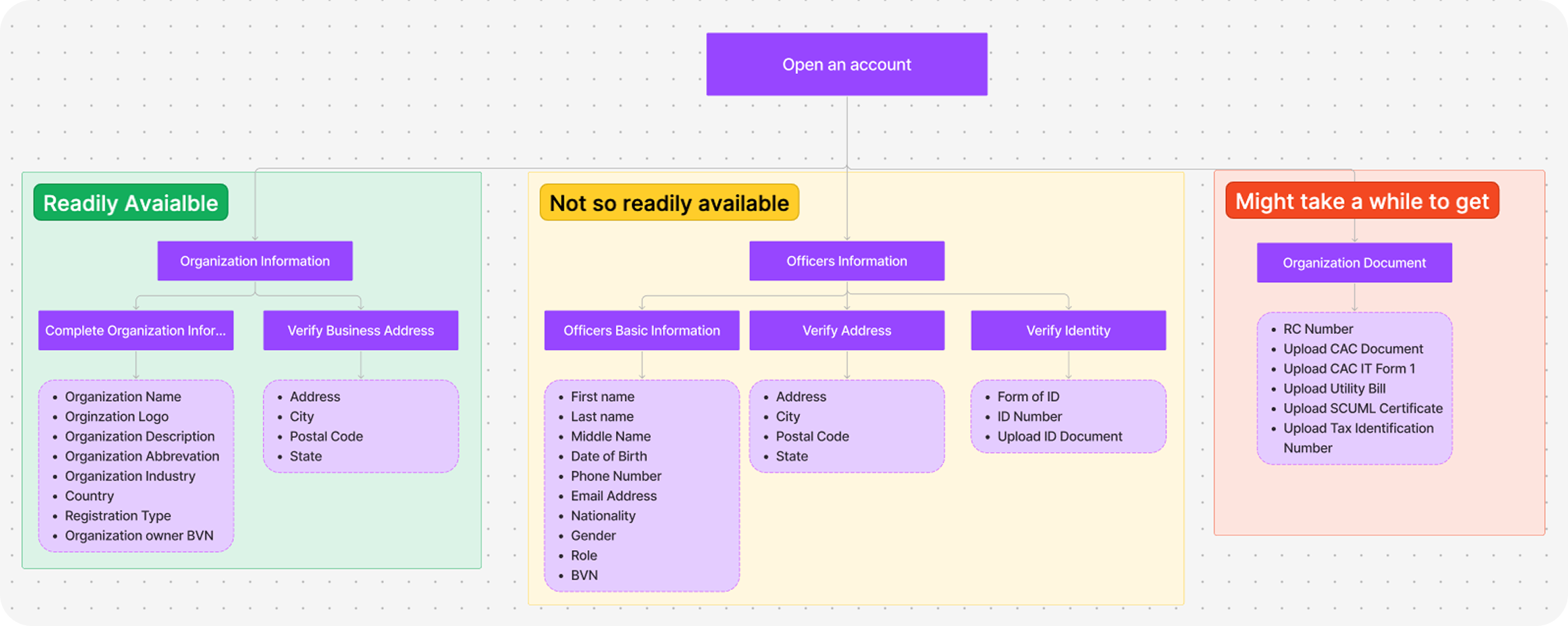
This structure let NGOs complete the application progressively instead of confronting every requirement at once.
One thing I made sure of
Founders could save their progress at any point and return to finish the application.
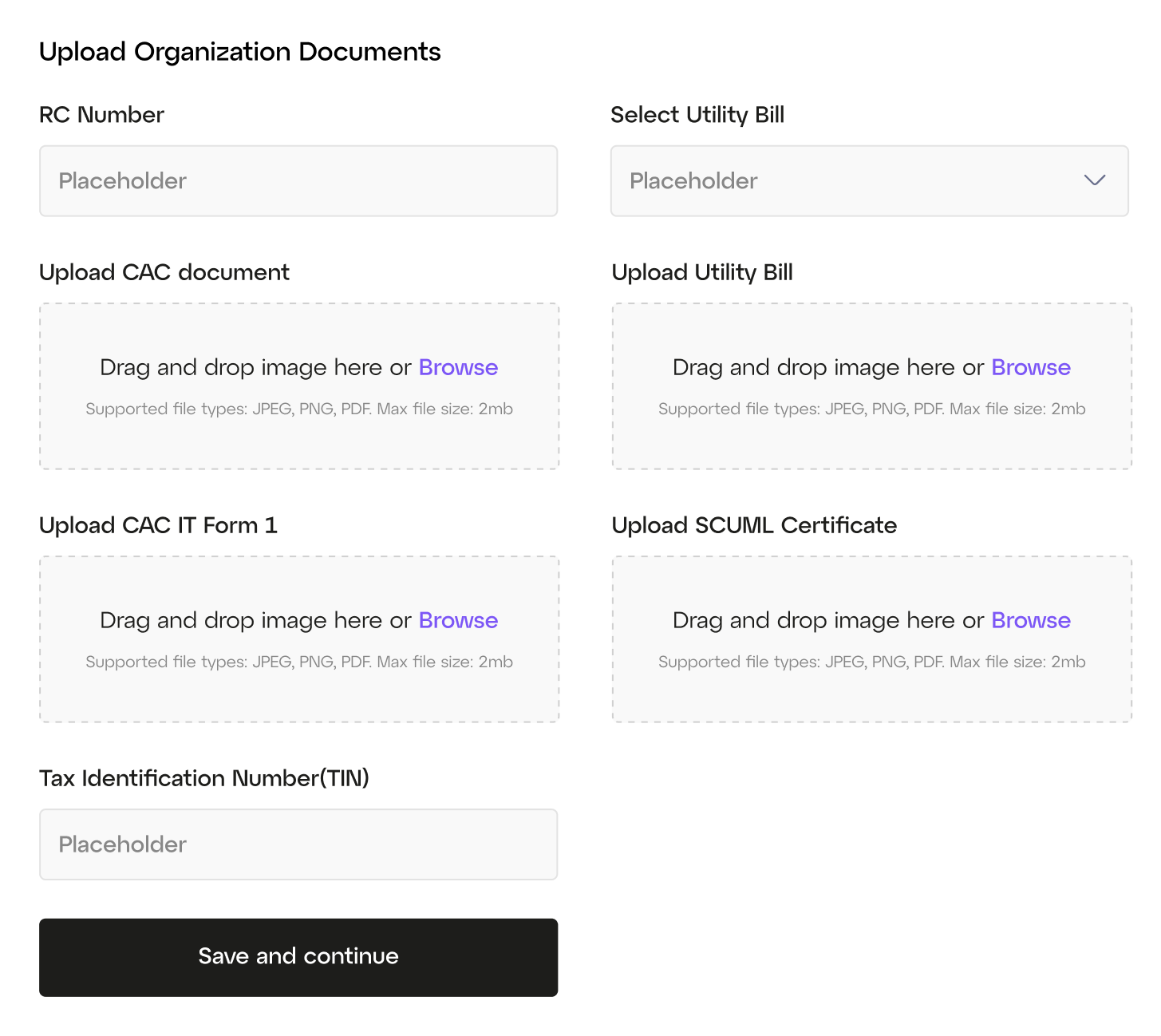
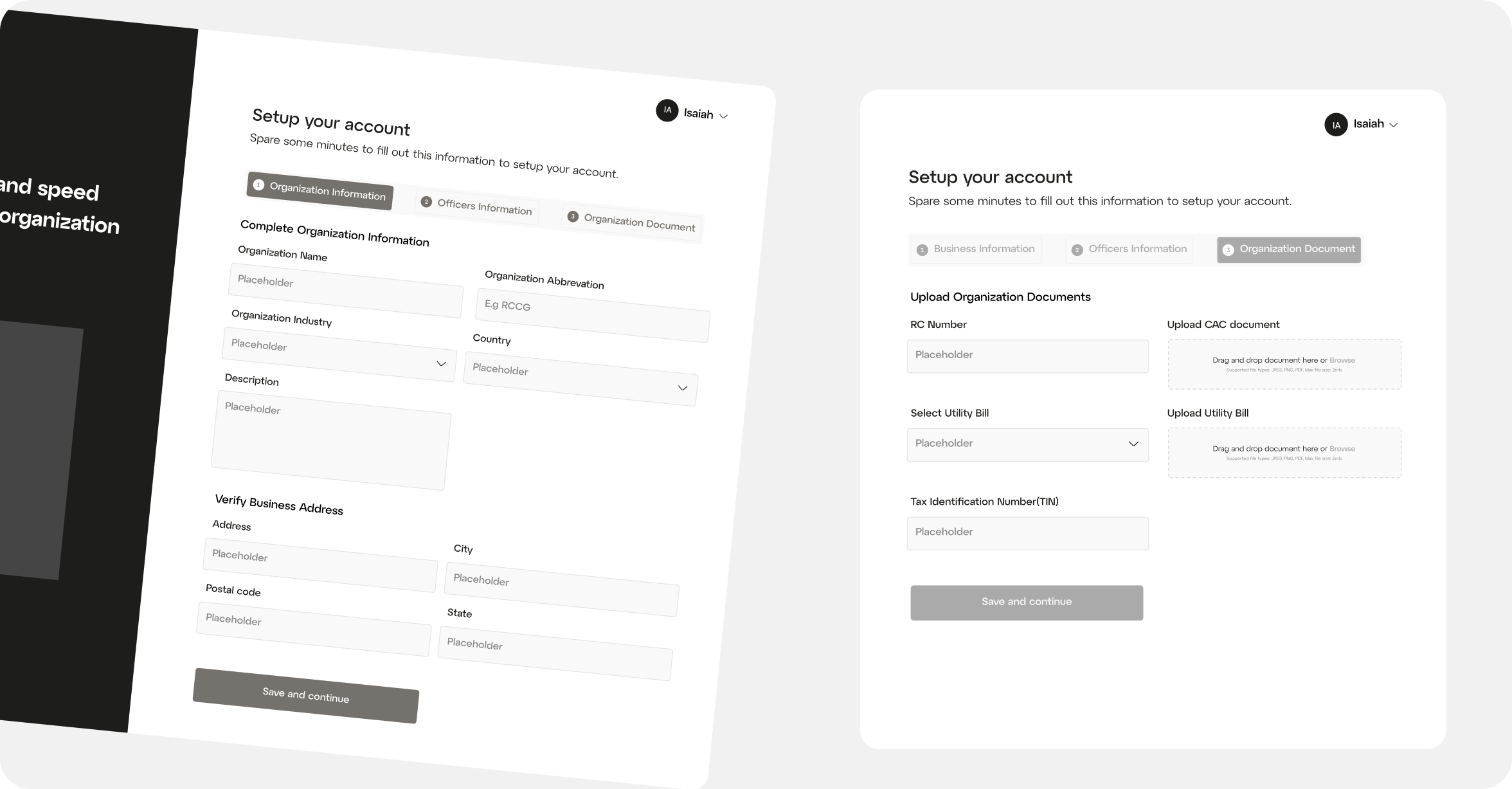
Wireframes
I created wireframes to visualize and test the flow before moving into detailed designs.
Final designs
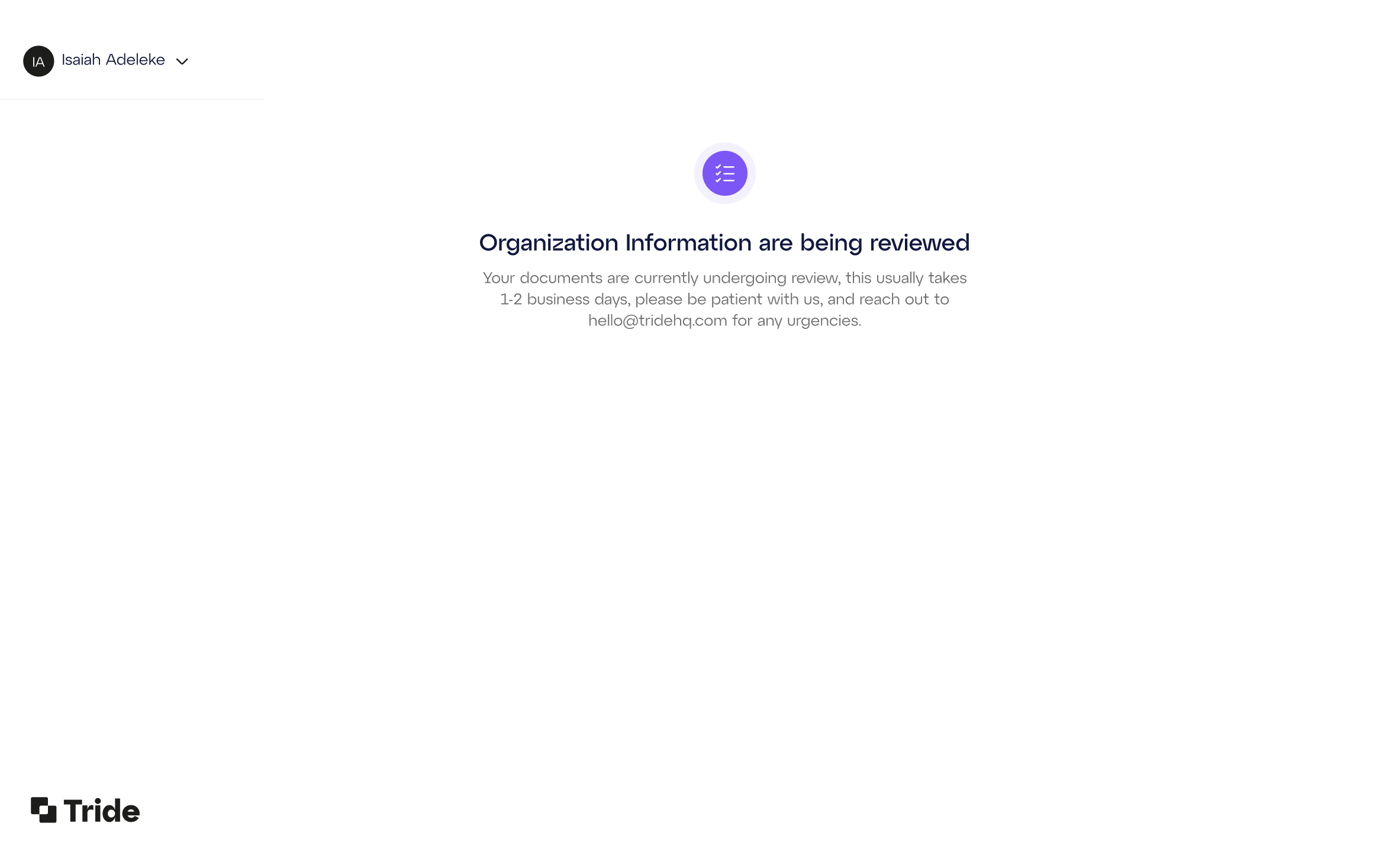
After several iterations, we settled on the final onboarding designs.
Mobile responsiveness
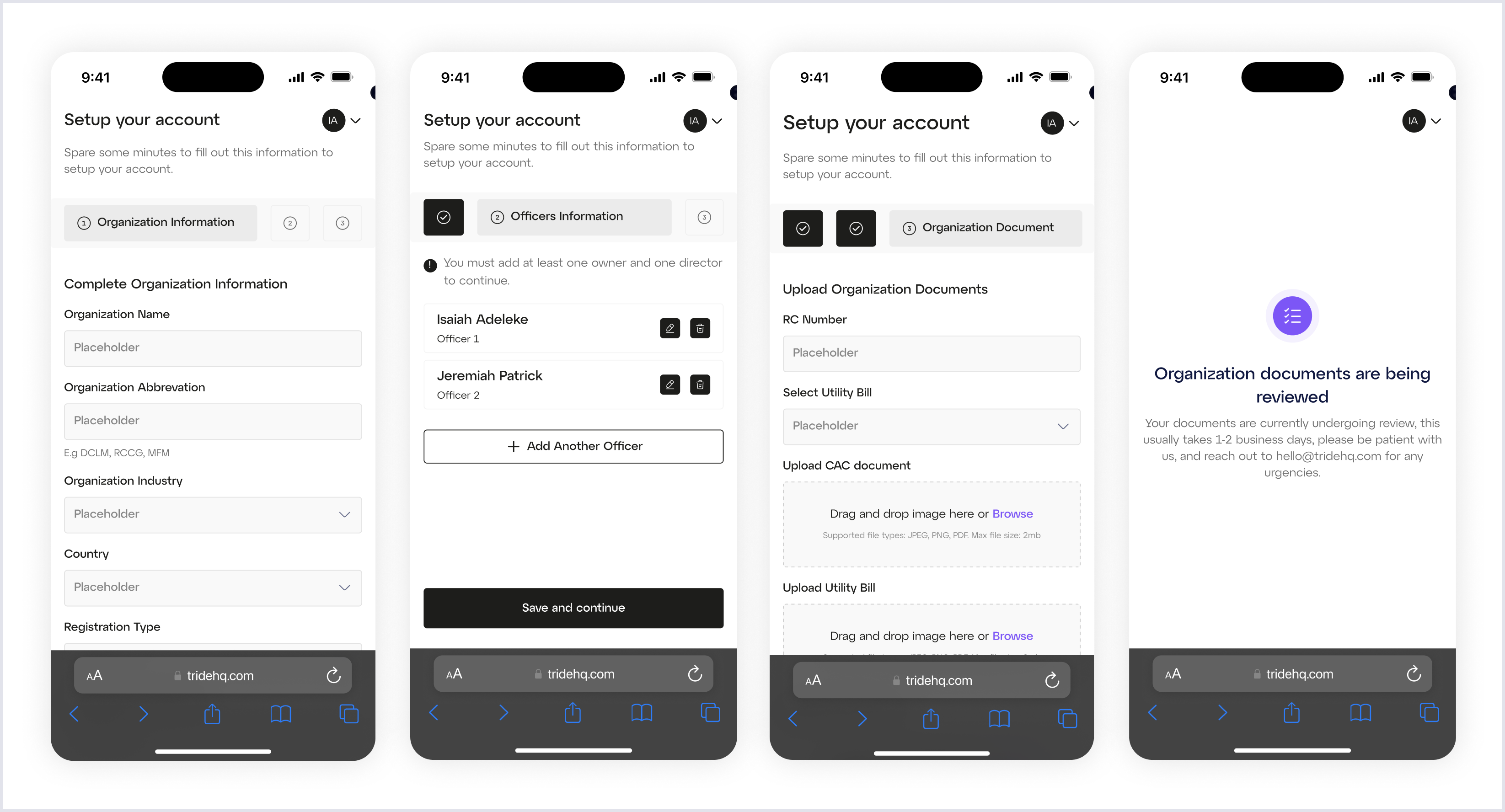
We also designed the experience to work on mobile.
The launch revealed a bigger problem
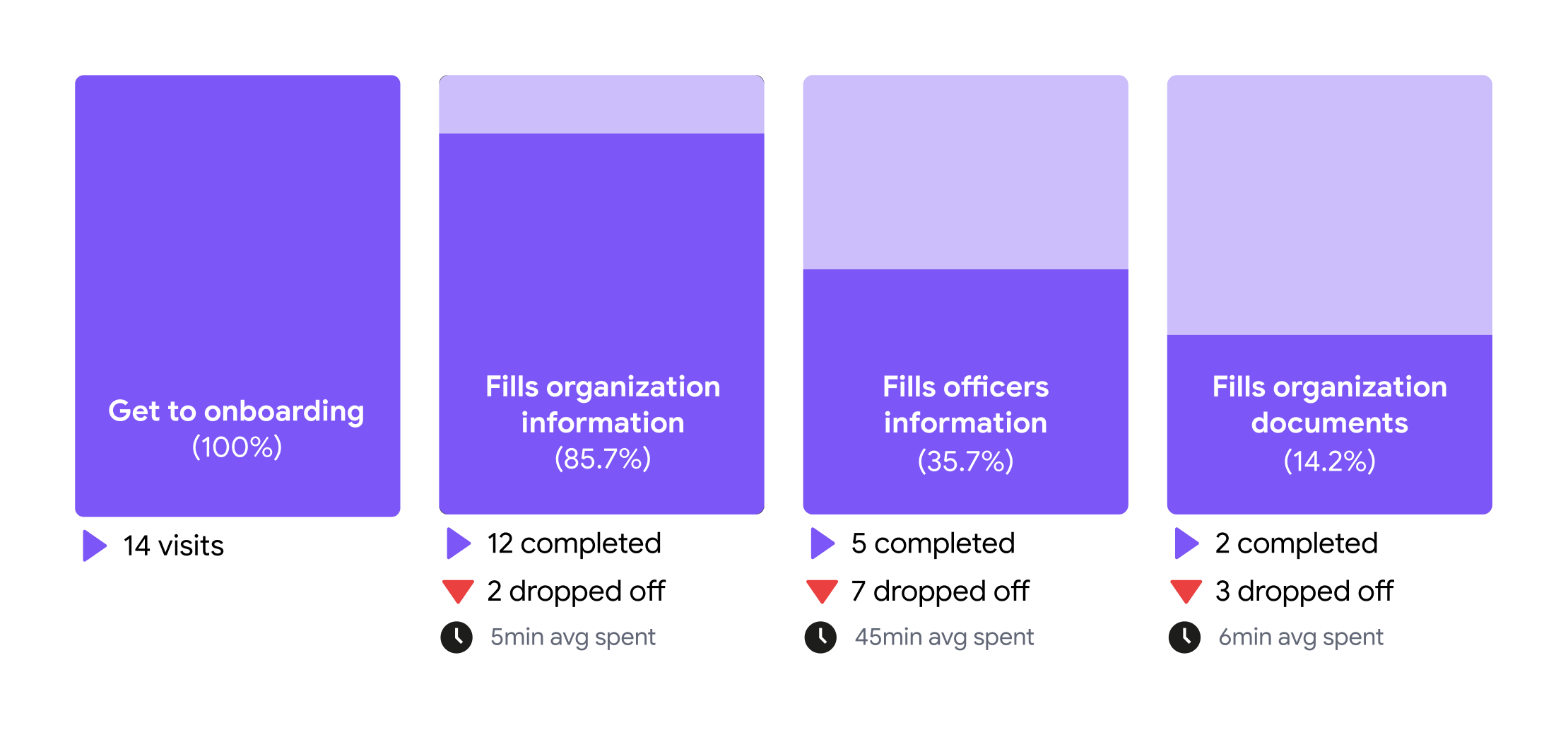
Within the first 10 days of launching, only 2 out of 14 organizations (14.3%) completed onboarding.
We reached out to users who had dropped off and discovered that the biggest obstacles were providing officers' information and uploading organizational documents.
These findings showed that while we had simplified the process of opening an account, some of the requirements still prevented organizations from completing it.
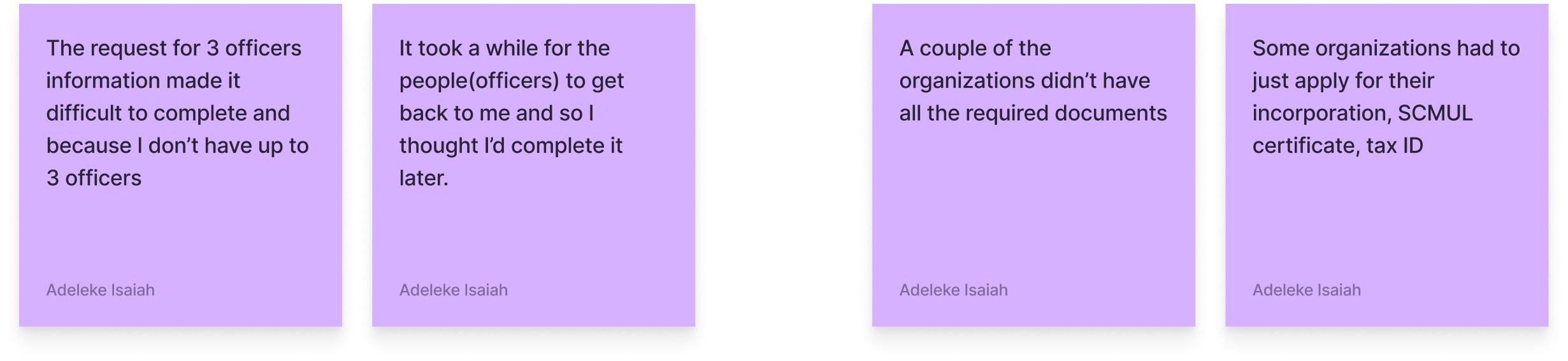
Here's what some customers said when we asked why they dropped off at the officers' information and organizational documents steps.
Removing the barriers to onboarding
We revisited the onboarding requirements with a legal professional and identified changes to reduce friction:
- Reduced the minimum number of trustees from three to two, removing an unnecessary requirement from the initial flow.
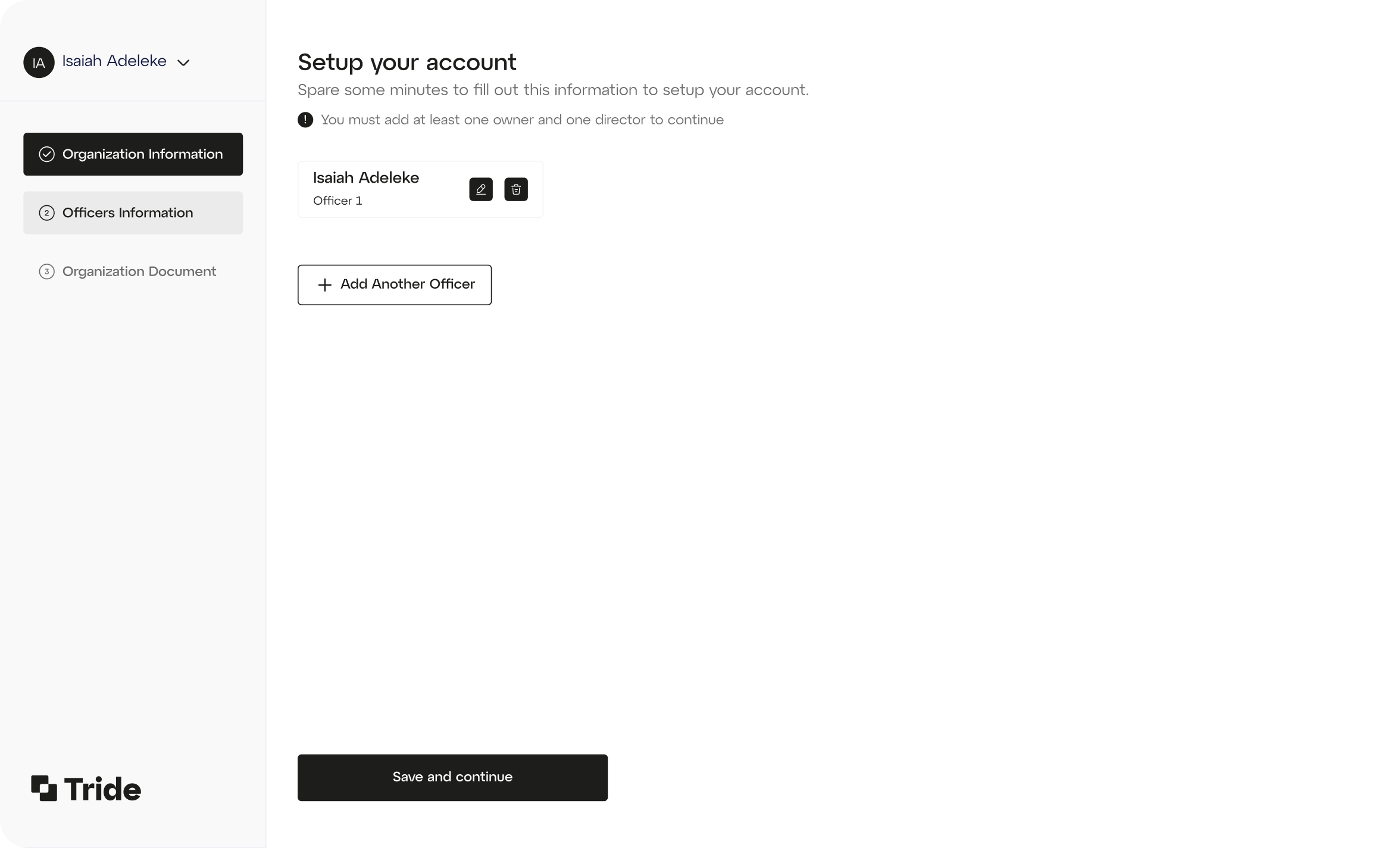
- Introduced an account option for early-stage organizations, allowing eligible users to open an account with a ₦500,000 deposit limit while completing additional documentation for an upgrade.
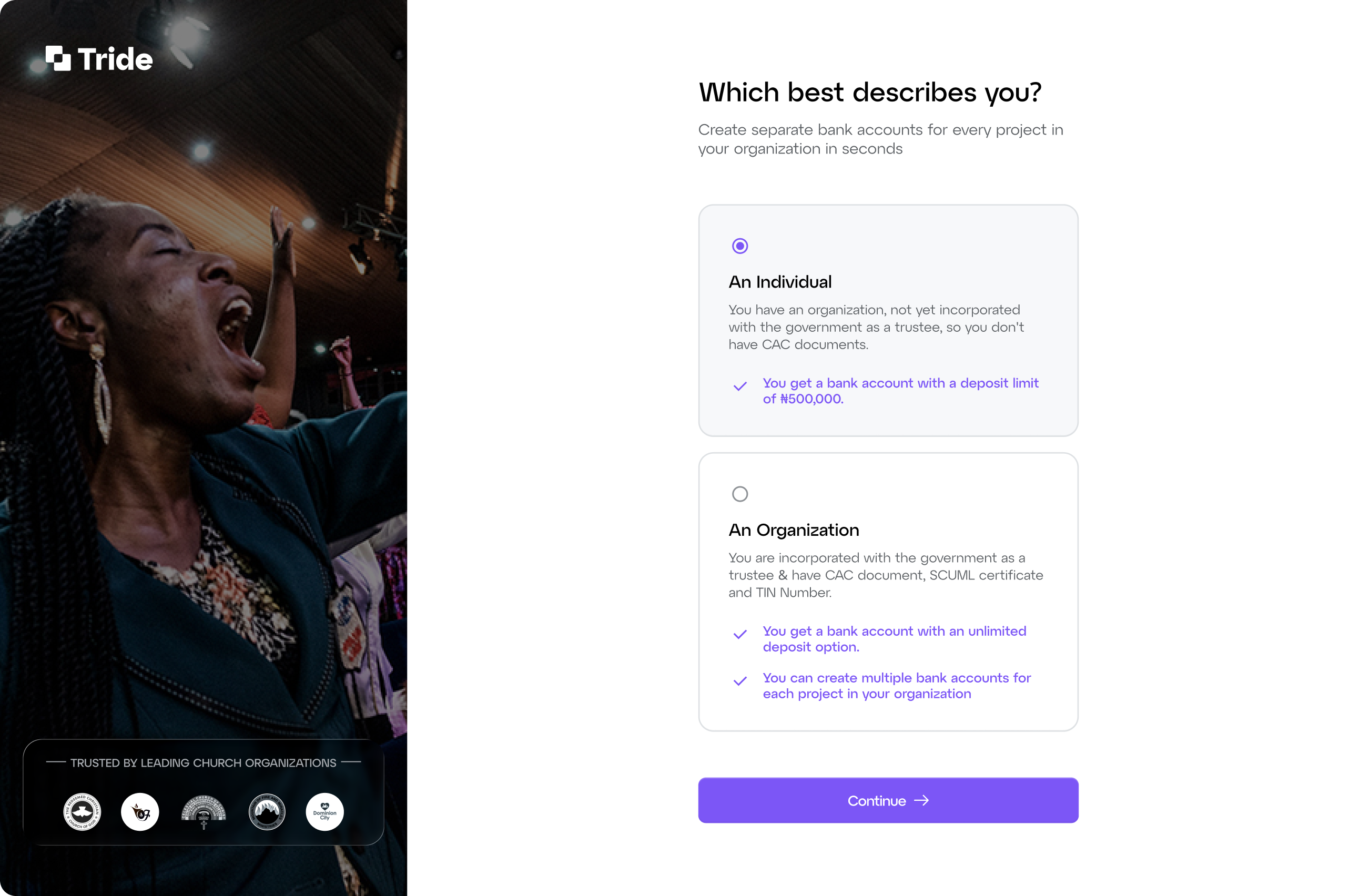
- Displayed the account limit for individual organizations and encouraged them to upgrade sooner.
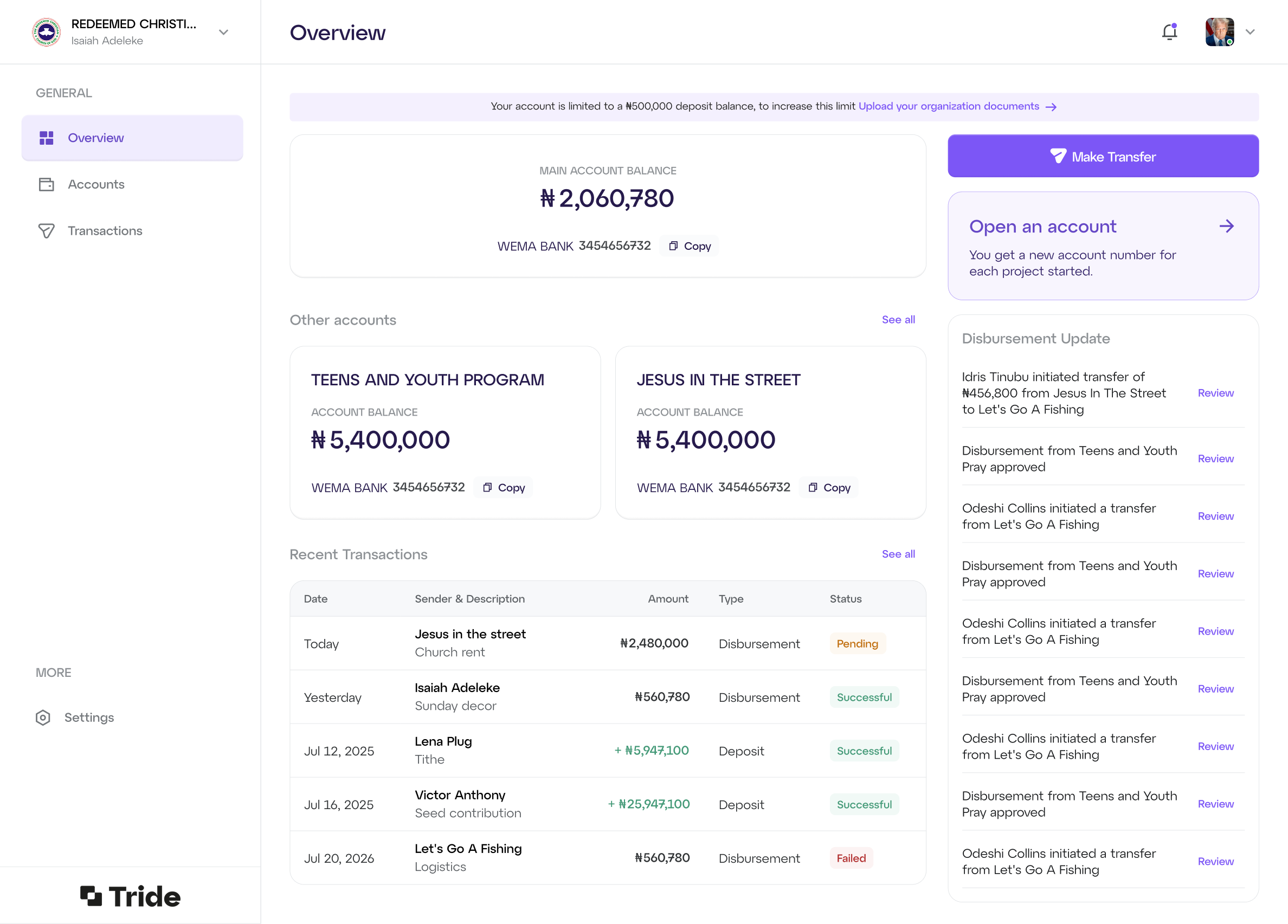
These changes allowed more organizations to progress without being blocked by requirements they couldn't immediately fulfil.
Final results and impact
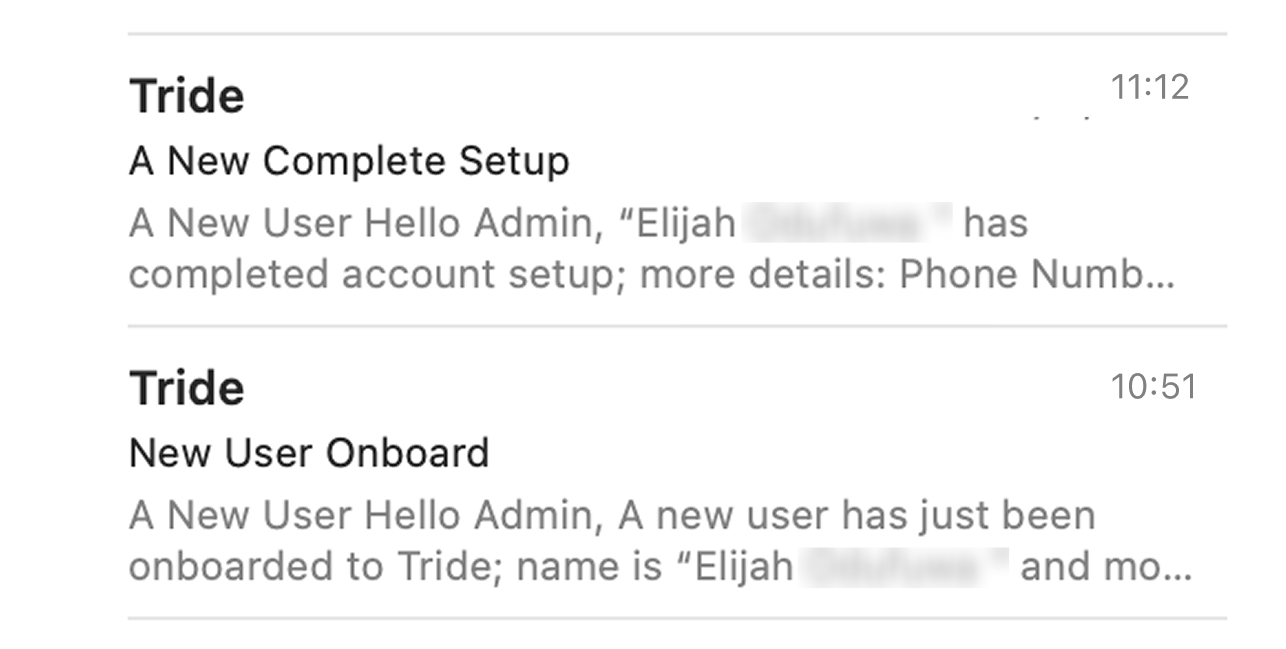
Six users returned and completed setup, opening bank accounts. The clearest test came from a new user who completed the entire onboarding process in 21 minutes—a sharp contrast with the weeks the traditional process could take.
They joined at 10:51 a.m. and completed setup at 11:12 a.m.
More case studies
Shuffle through more product work and the decisions behind it.
Reducing doctors' documentation time by 75% with AI
Designed an AI-powered clinical documentation experience that helped doctors move from writing medical notes to reviewing AI-generated ones, supporting 6,173 consultation starts across five pilot hospitals in its first month.
How user research helped turn EnergyStack into a $450K+ business
Led product design from discovery to launch, transforming a vendor-led solar marketplace into a financing-powered commerce platform that generated $450K+ in sales.
Read case study