
2026 · Ecommerce · Fintech
How user research helped turn EnergyStack into a $450K+ business
Led product design from discovery to launch, transforming a vendor-led solar marketplace into a financing-powered commerce platform that generated $450K+ in sales.
Role
Lead Product Designer
Team
2 Product Designers (including me) · 2 Frontend Engineers · 2 Backend Engineers
Timeline
2026
Category
Ecommerce · Fintech
Platform
Web and Mobile
$450K+
Gross product sales in under a year
8%
Increase in total loan book value in the first 2 months
89%
Financing share of checkouts after redesign
The idea: Making solar financing and shopping easier
At Rivy (formerly Payhippo), we provided financing for customers purchasing solar installations. But customers still needed to be connected to solar vendors to complete their purchases.
We saw an opportunity to bring both experiences together.
We conducted initial research, received positive feedback, and designed detailed user flows for vendors, customers, and internal administrators.
We then created a prototype to validate the concept with our existing solar vendor partners.
The interview that challenged our assumptions
We scheduled a prototype walkthrough with representatives from three solar vendors who were already working with Rivy.
The presentation went well on the surface. Nobody had negative feedback, but there wasn't much excitement either.
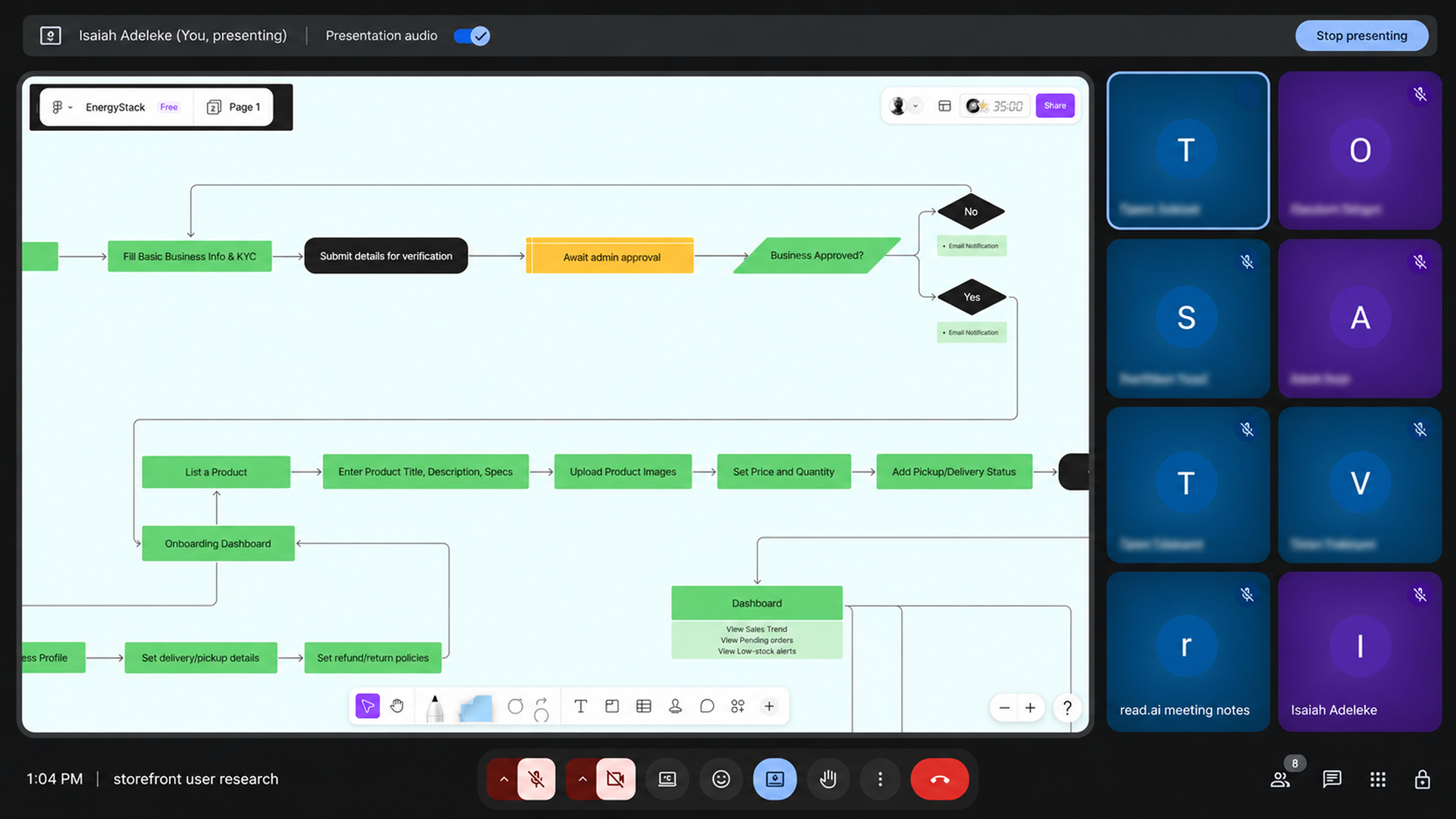
So I asked a question:
Who on your team would be responsible for uploading and managing your products?
That was when we discovered the problem.
Our research had validated the opportunity, but not the business model we had designed around it.
What we assumed
Vendors would manage their storefronts.
Giving vendors a marketplace would make it easier to connect them with customers.
What we learned
Vendors wanted sales, not more admin work.
Managing product listings wasn't valuable enough for vendors to change their existing processes.
From marketplace to commerce platform
The research prompted a broader team discussion about how we could solve the same customer problem without relying on vendors to manage storefronts.
We collectively decided to pivot.
This introduced new operational responsibilities. The company brought in a Head of E-commerce, while we built pricing, inventory, and vendor fulfilment management into our existing internal admin portal.
As Lead Product Designer, I led product design through the transition, working with another designer and four engineers to translate the new direction into a working product.
Original concept
- Solar vendors
Vendors upload and manage their own products
- Marketplace
Hosts multiple vendor storefronts
- Customers
Browse and purchase from vendors
New approach
- EnergyStack
Rivy manages product listings, pricing, and commerce
- Customer checkout
Customers pay outright or apply for financing
- Vendor fulfilment
Partner vendors supply and install products
Shipping the MVP in four weeks
With the new model agreed, we moved quickly to validate it.
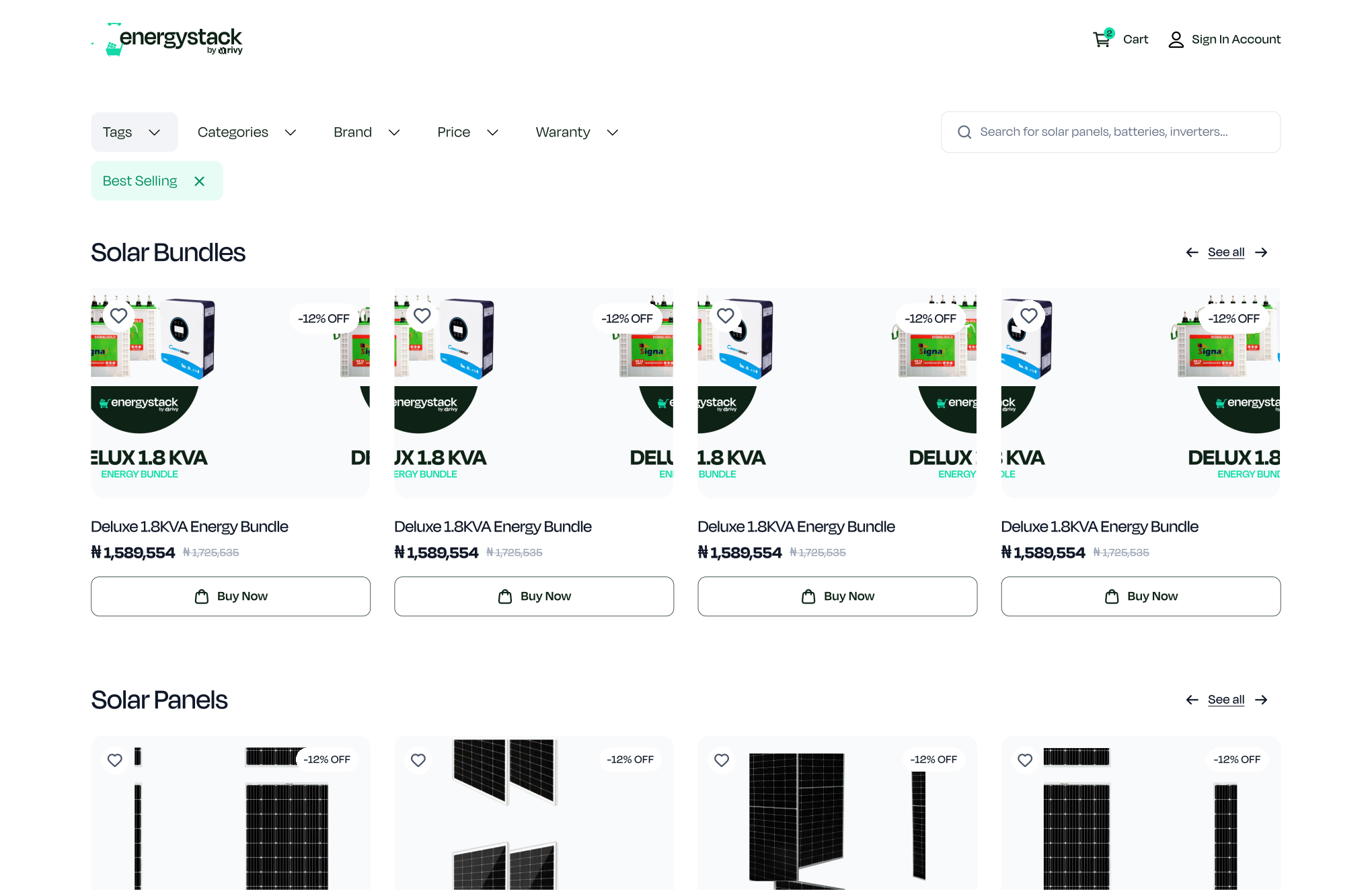
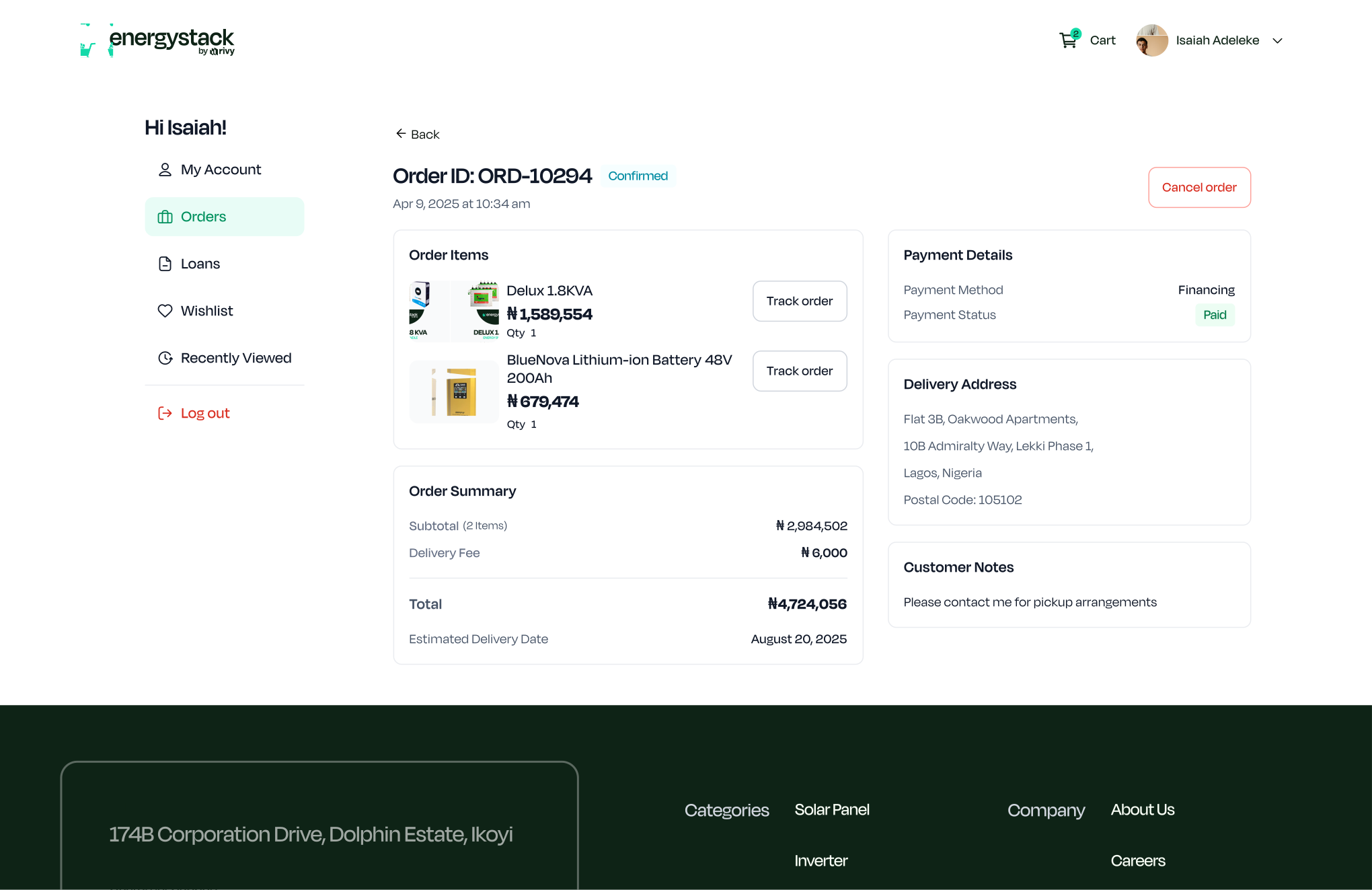
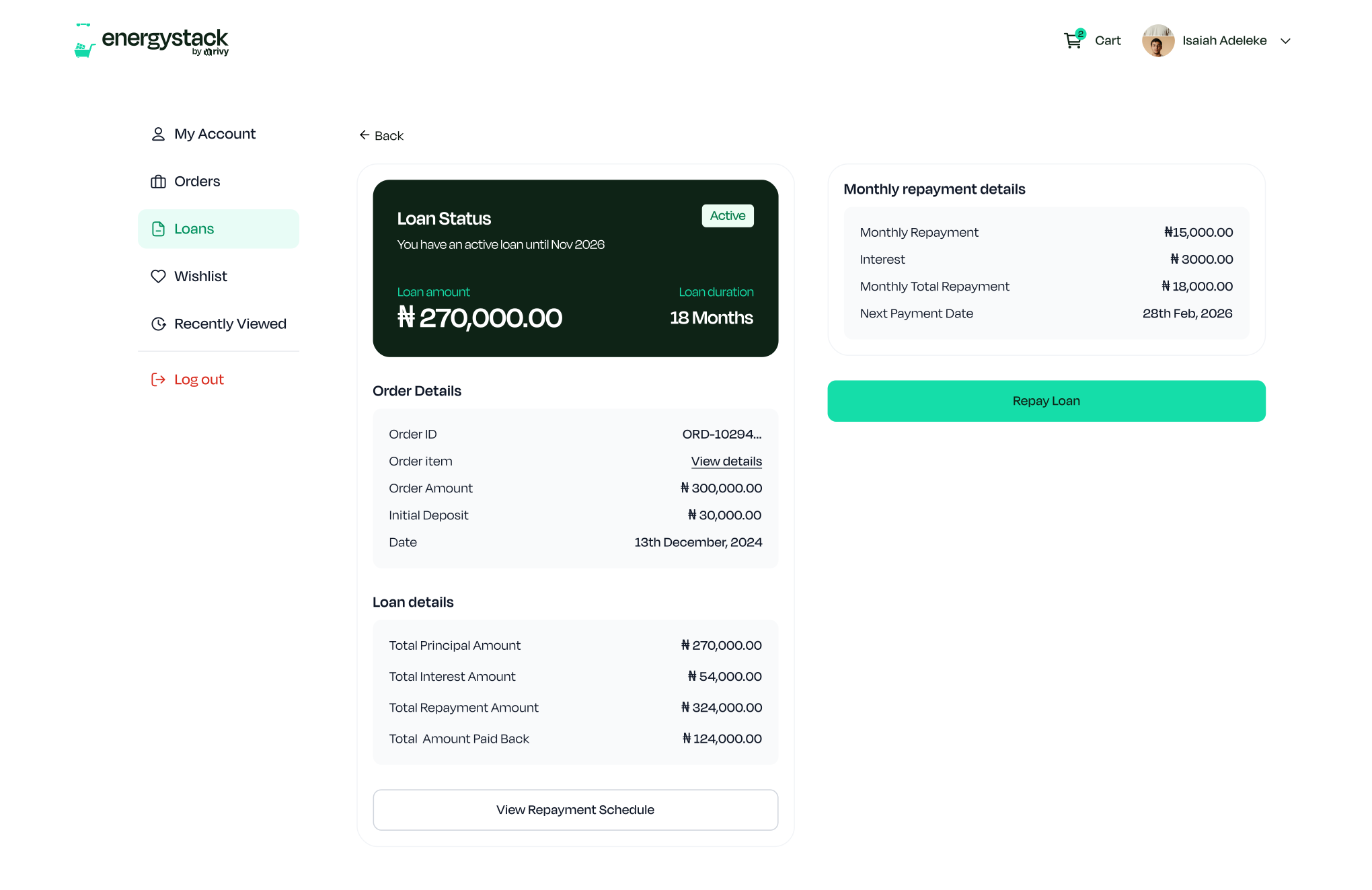
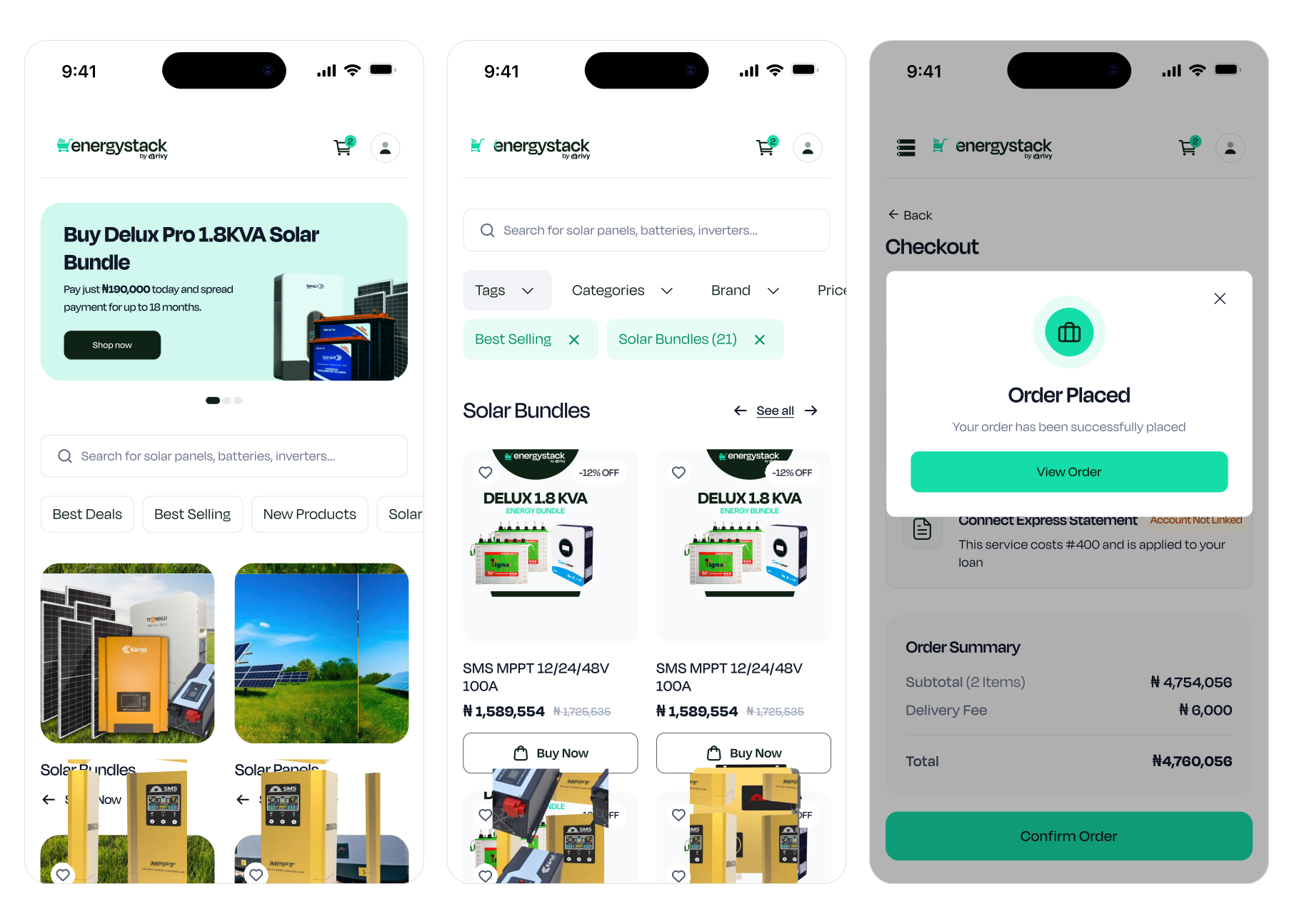
We prioritised a web-first experience to reduce development complexity and launch faster. Customers could browse solar products, add items to their cart, and choose between paying outright or checking out with Rivy financing.
We also designed the internal tools needed to support product pricing, inventory, and vendor fulfilment.
Working closely with engineering, we moved from the redesigned concept to a working MVP in approximately four weeks.
We subsequently integrated EnergyStack into Rivy's mobile app.
Improving conversion by making financing visible earlier
After launch, we noticed a problem. EnergyStack was attracting visitors, but many weren't progressing to purchase.
We conducted a user research audit to understand why.
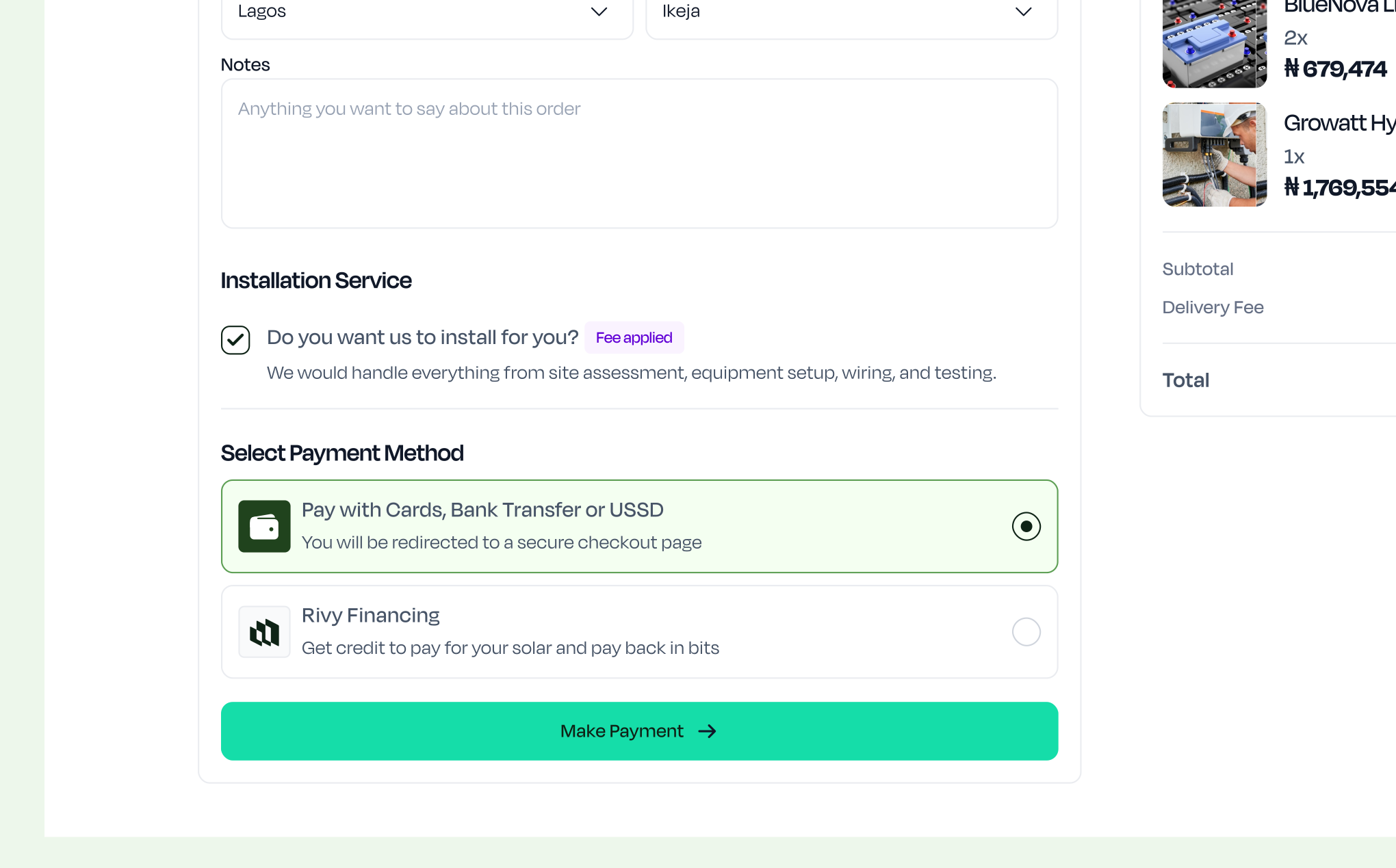
By then, many had already left.
We realised we were presenting financing as a payment method when it could be a reason to purchase in the first place.
What we changed
We redesigned how financing appeared throughout the shopping journey.
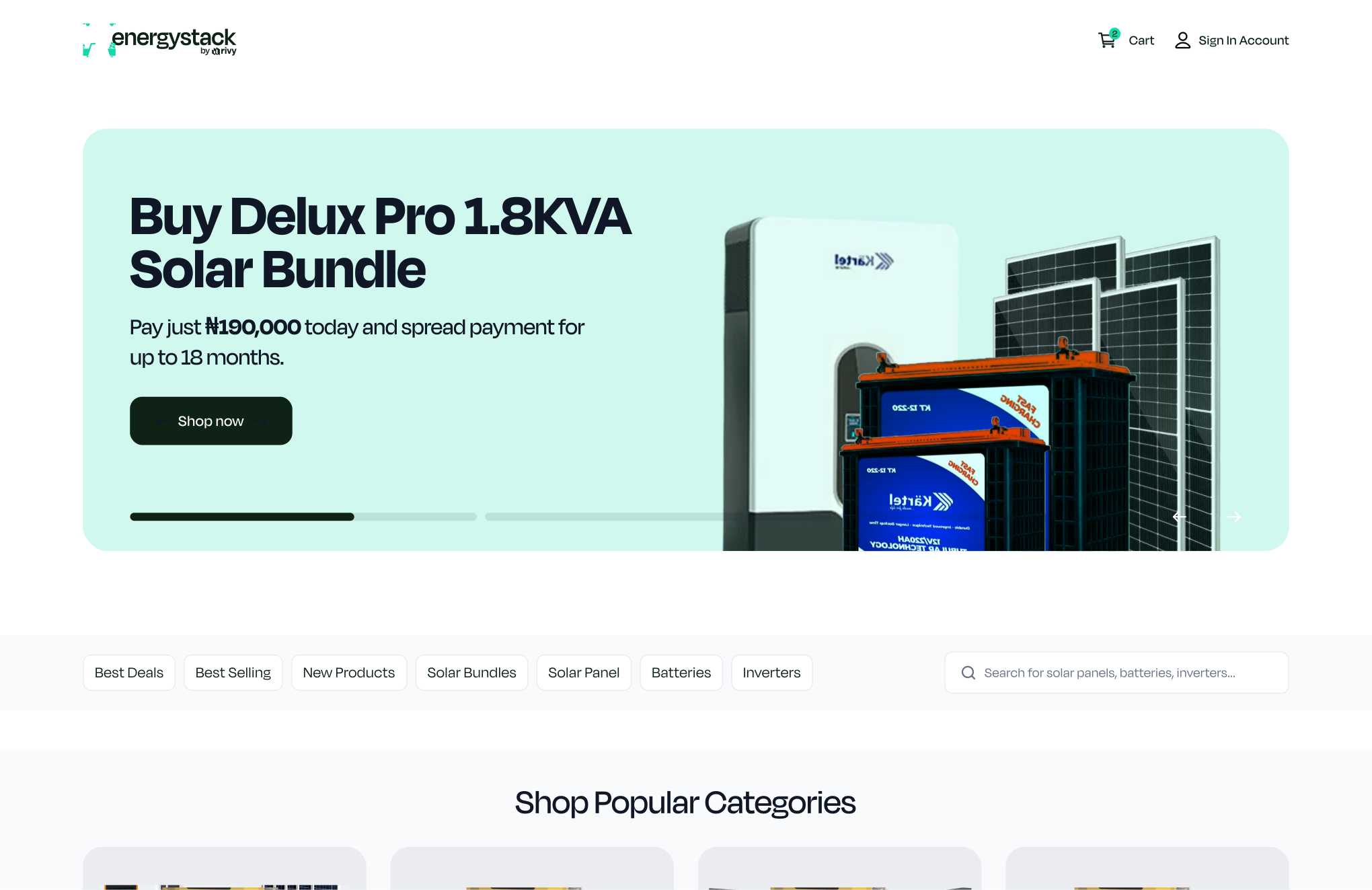
Homepage: Show affordability from the beginning
We introduced financing-led banners and product promotions highlighting the option to pay a fraction of the product cost upfront.
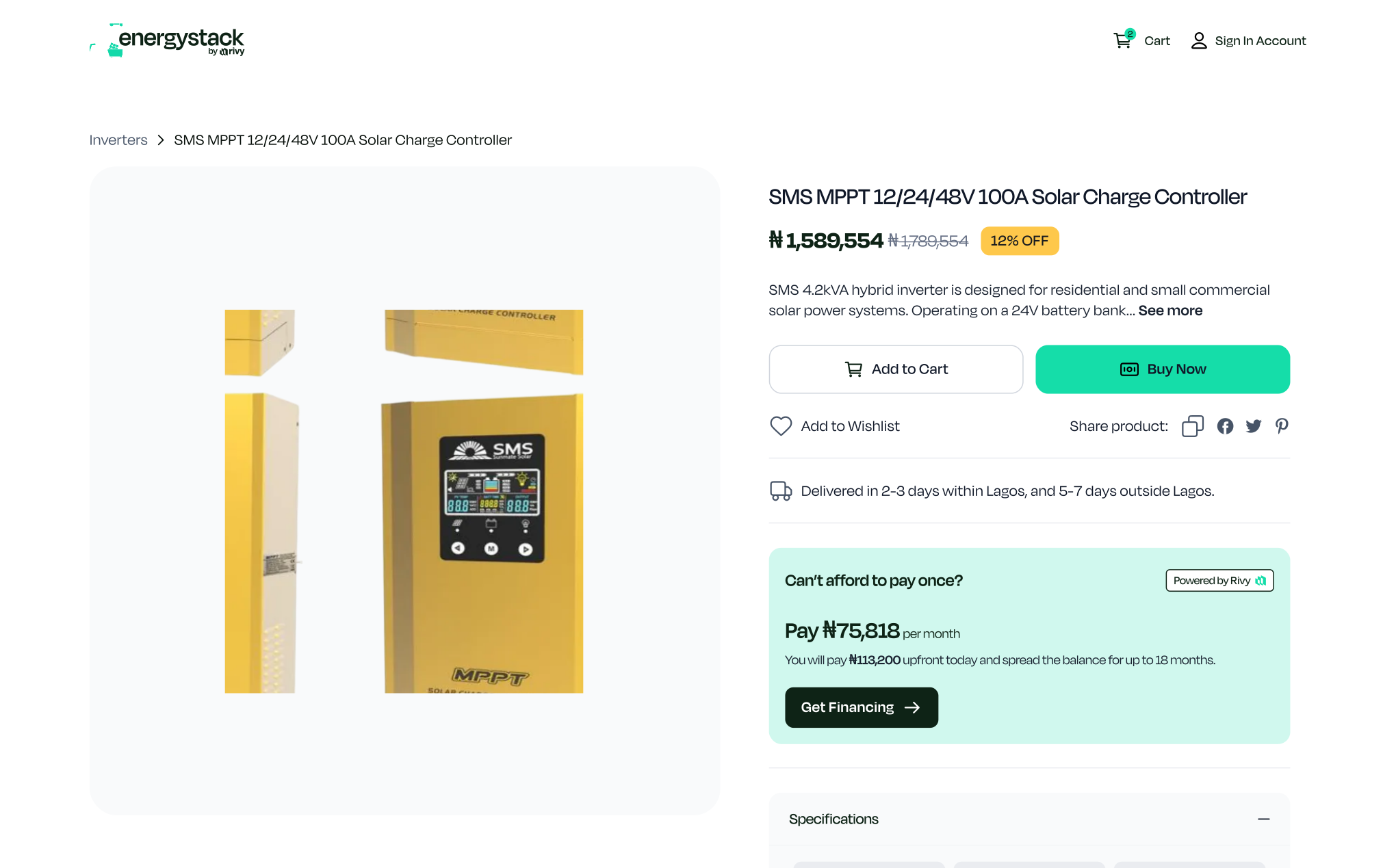
Product details: Make financing visible just where they see the prices
Instead of showing only the full price, we displayed personalised financing breakdowns for each product, including the upfront payment and repayment options.
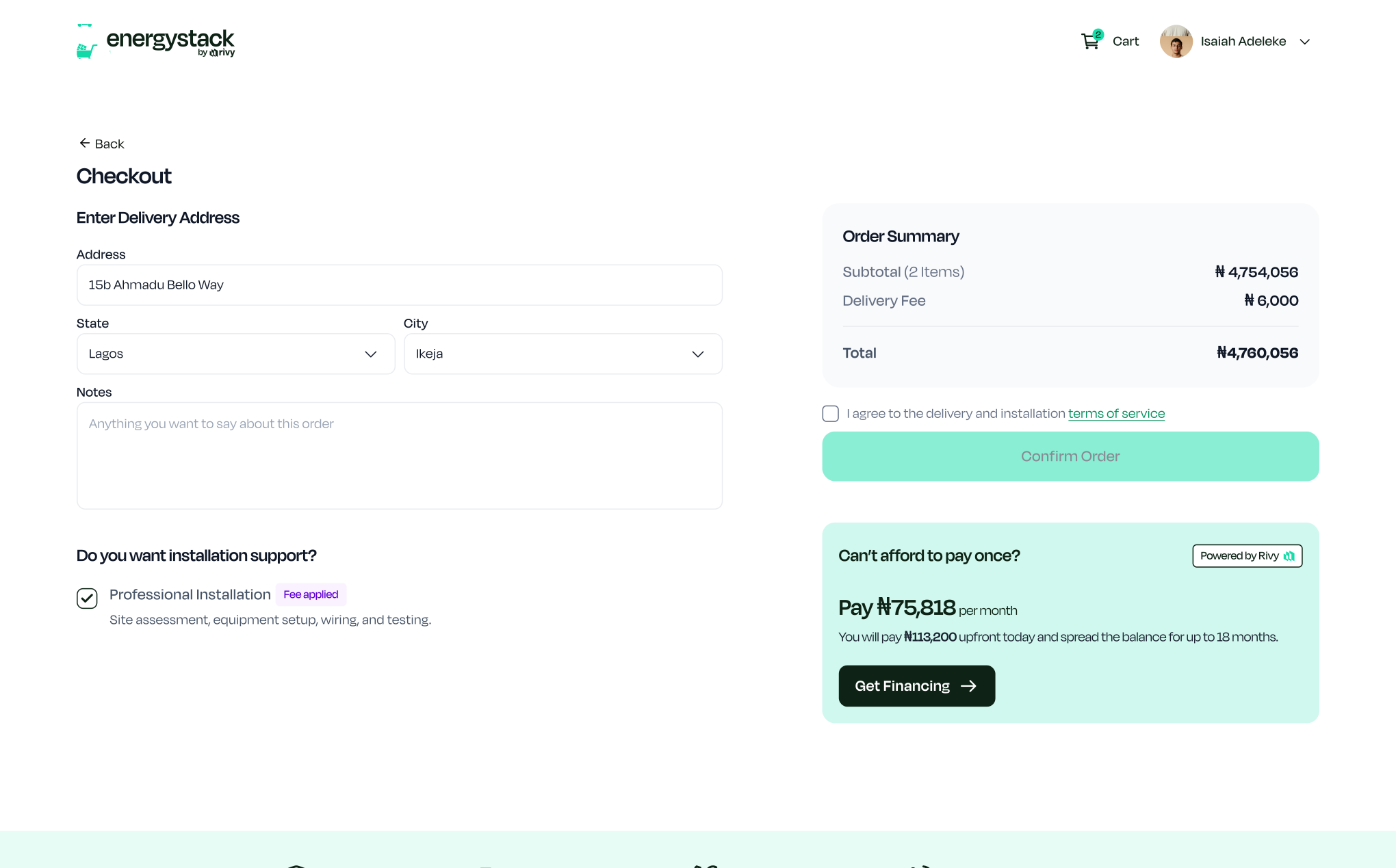
Checkout: Preserve the choice and show possibility of financing still
Customers could still pay outright or use financing, but they now understood their options before reaching checkout.
The impact
By bringing affordability into the product discovery experience, we aligned EnergyStack more closely with what customers needed and Rivy's financing objectives.
| Period | Financing checkout | Cash checkout |
|---|---|---|
| Before redesign | 47% | 53% |
| After redesign | 89% | 11% |
Financing's share of checkouts rose by 42 percentage points. These percentages show payment method share, not the overall visitor-to-purchase conversion rate.
The business impact
EnergyStack quickly showed commercial promise.
Within its first two months, the product generated approximately $35K in gross sales and contributed to an 8% increase in Rivy's total loan book value.
In less than a year, EnergyStack generated over $450K in gross product sales, becoming a significant source of sales for the business.
$35K
Gross sales in the first 2 months
Early validation of the pivot
+8%
Increase in total loan book value
Growth in the first two months
$450K+
Gross product sales in less than a year
From marketplace concept to commercial success
What I learned
EnergyStack taught me that good product decisions aren't always about building what users initially say they want.
Our first major breakthrough came from discovering that vendors weren't willing to do the work our marketplace required. The second came from realising that financing needed to influence purchasing decisions long before checkout.
In both cases, the solution came from challenging how we'd approached the problem, rather than simply improving the interface.
Good research doesn't just validate designs. It can change the direction of a business.
More case studies
Shuffle through more product work and the decisions behind it.
Streamlining bank account creation: From weeks of paperwork to a 21-minute digital process
Tride helps non-profit organizations open and manage bank accounts. I designed an onboarding experience to help NGOs get an account sooner, without weeks of paperwork and back-and-forth.
Reducing doctors' documentation time by 75% with AI
Designed an AI-powered clinical documentation experience that helped doctors move from writing medical notes to reviewing AI-generated ones, supporting 6,173 consultation starts across five pilot hospitals in its first month.
Read case study